USA
USA
 Canada
 Japan
Japan
 Malaysia
 Singapore
 Taiwan

 Canada

Basic Baby Milestones Explained

Key Takeaways
- Babies often begin to roll over and smile spontaneously at 4 months.
- More head and neck control at 6 months means babies are usually ready to use a high chair.
- There are many baby milestones that occur at 9 months, including crawling, pulling to stand, and becoming interested in self-feeding.
- At 12 months, babies often stand alone and walk whilst holding steady objects like furniture. They also have a fine pincer grip.
A lot happens during your baby’s first months and year. They respond to voices they recognise. They hold their head up during tummy time. They reach out and grab objects. Those special moments are all signs your little one is developing as expected.
Your paediatrician will track your child’s milestones at routine visits. However, it’s still valuable for you to track these milestones. This process helps you better understand your baby’s development, so you can encourage growth through appropriate interactions and activities and bring up any concerns with your paediatrician at your next visit.
Learn more about basic baby milestones at Abiie®.
What Are Developmental Milestones?
They’re physical or behavioural checkpoints that serve as markers in a child’s development. Baby development stages are categorised into four main groups, with many milestones overlapping. Your categories include:
- Cognitive Milestones - These are your baby’s learning, thinking, and problem-solving skills.
- Motor Skills Milestones - This is how your baby moves and develops physically.
- Language and Communication Milestones - These reflect how your child understands and uses language, such as talking or following directions.
- Social and Emotional Milestones - These milestones involve how your baby interacts with others and regulates their emotions.
What Are Baby Milestones By Month?

Most babies will reach certain milestones at similar ages. However, it’s important to remember that no two babies are exactly alike. Your baby will develop at their own pace.
Keep in mind these are merely guidelines. You needn’t necessarily worry if your baby seems to need more time for development. Your paediatrician can tell you more if you have concerns.
Your Baby at 2 Months
Most babies become more social and interactive at 2 months. They smile in response to others, look at faces, and even try to interact by turning toward voices. They’re also becoming more physically active at this stage because their neck muscles are growing stronger.
Common baby milestones include:
- Begin to smile at people
- Turns head toward sounds
- Lifts up head during tummy time
- Moves arms and kicks
- Coos and makes gurgling noises
- Tracks people and objects with eyes
- May become bored (fussy or cry) when activities don’t change
Your Baby at 4 Months
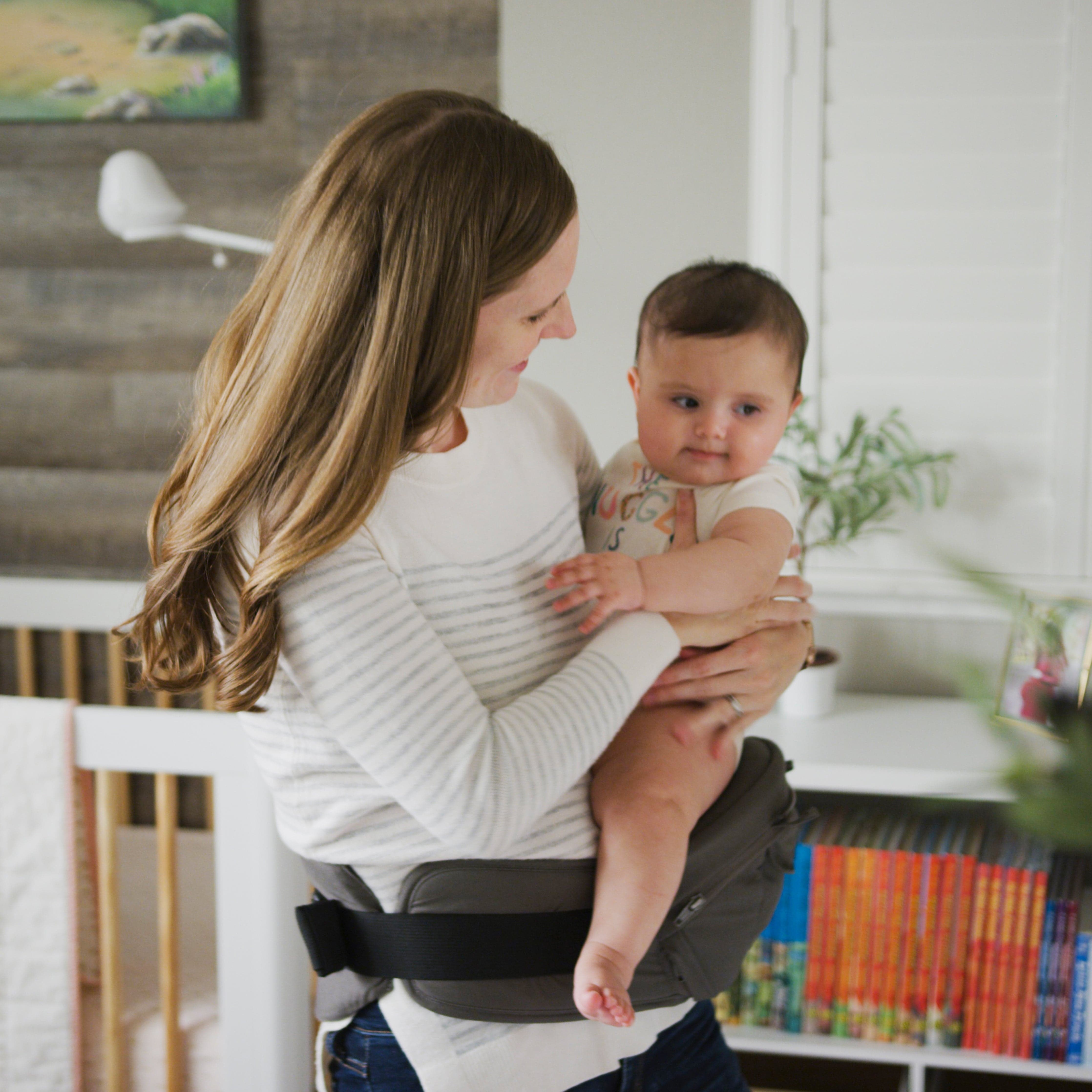
When do babies roll over? Around 4 months. Some babies may begin to roll over from tummy to back around this age, or vice versa. They’re also ready to snuggle into their baby hip carrier between 3 and 4 months, as they have more head control.
Your baby is likely becoming even more social at 4 months by cooing, babbling, and enjoying play with others.
Baby developmental milestones around 4 months often include:
- Smiles spontaneously
- Likes to play with people
- Begins to babble
- Cries in different ways to show hunger, tiredness, or pain
- Brings hands to mouth
- Sits up with your support
- Reaches for toys with one hand
Your Baby at 6 Months
Babies’ head and neck muscles are much stronger at 6 months, allowing them to hold their head steady without support and sit up unassisted. This key stage of baby development also means they’re ready to transition to using a high chair, like our Beyond Junior® wooden high chair at Abiie®.
More baby milestones at this age include:
- Recognises familiar faces
- Sits with little to no support
- Enjoys seeing themselves in the mirror
- Responds to their own name
- Makes full laughing sounds
- Beings to pass things from one hand to another
- Begins self-feeding finger foods
- Rolls over in both directions
- Makes sounds to express joy to displeasure
- Begins to understand basic cause-and-effect (like shaking a rattle makes noise)
- May develop stranger anxiety
Your Baby at 9 Months
Babies become highly mobile at this stage. They’re also quite curious, making home safety crucial.
Though socially engaged, babies may become clingy or shy/fearful of strangers at 9 months. They often show a strong preference for their primary caregivers.
Key baby milestones:
- May be clingy with familiar adults
- Often crawls to get around
- Pulls to stand
- Understands “no”
- May imitate gestures, like waving or clapping
- Develops immature pincer grasp
- Understands when things drop out of sight
- Becomes more interested in learning to self-feed
Your Baby at 12 Months
Your baby is officially a toddler at 12 months! And that comes with many exciting developmental milestones. They’re more active and curious – and may even take steps on their own.
Babies also develop a better pincer grasp at this age. This means their fine motor skills have improved enough to start scooping food off their silicone plate themselves. They’re just learning, so things will get messy. Use your Ruby Wrapp® silicone bib from Abiie® to save yourself the hassle of excess food messes.
Your key baby development milestones include:
- Stands alone
- ‘Cruises’ (walks around whilst holding furniture)
- Uses the pincer grip to pick up small objects
- Understands simple commands
- Waves bye
- Says ‘mama’ and ‘dada’ or one or two other words
- Tries to say words you say
- Enjoys playing simple games
- Explores things in different ways, like throwing, banging, and shaking (it’s a great time to try sensory play)
Experience Every Milestone With Abiie®
Your baby will grow and experience big milestones, and we’re here every step of the way at Abiie®. From our Huggs® carrier that adapts to multiple carrying positions for ages 3 months to 36 months, to our Beyond Junior® high chair that grows with your child from infancy (6 mos.) to adulthood, try our innovative baby products now.
About The Author